A whole island, one moving home.
Over ten days, my family and I drove Iceland's Ring Road counterclockwise in a camper van. Every section changed the scenery: black coast, blue ice, basalt, craters, fjords and waterfalls that made us pull over again and again.
We rented from Indie Campers for eight nights. Combining our transport, kitchen, storage and bed gave us the flexibility to respond to April weather and make spontaneous stops. This is the route I experienced and the planning advice I would take into a second lap.
The stages below follow the broad sequence from my trip story. The last driving days are grouped because I do not have a verified stop-by-stop record for each date.
What our ten days looked like.
Reykjanes and the Blue Lagoon
My family and I started near Keflavík, easing into the trip with the Blue Lagoon before committing to the full drive. It is a famous stop for a reason: pale geothermal water against dark volcanic ground makes a pretty unforgettable first impression.
From there, the camper became our home base. We could carry food and gear, move with the weather and wake up close to the next part of the loop.
Blue Lagoon visitor informationÞingvellir, Silfra, Brúarfoss and Geysir
I booked Silfra snorkeling through GetYourGuide, with Tröll Expeditions running the tour. Once I was zipped into a dry suit, I floated through the clear fissure in Þingvellir. The cold water and the view below me made it feel unlike any other snorkeling trip I have done. We spent roughly 45 minutes in the water, then warmed up with hot chocolate afterward.
We also made time for Brúarfoss and the Geysir area. Brúarfoss was the waterfall I kept thinking about later: smaller than the headline falls, but with a striking blue channel through the rock. Silfra and Brúarfoss made this more than a standard Golden Circle checklist.
Tröll Expeditions Silfra snorkeling
Waterfalls, the plane wreck and a black beach
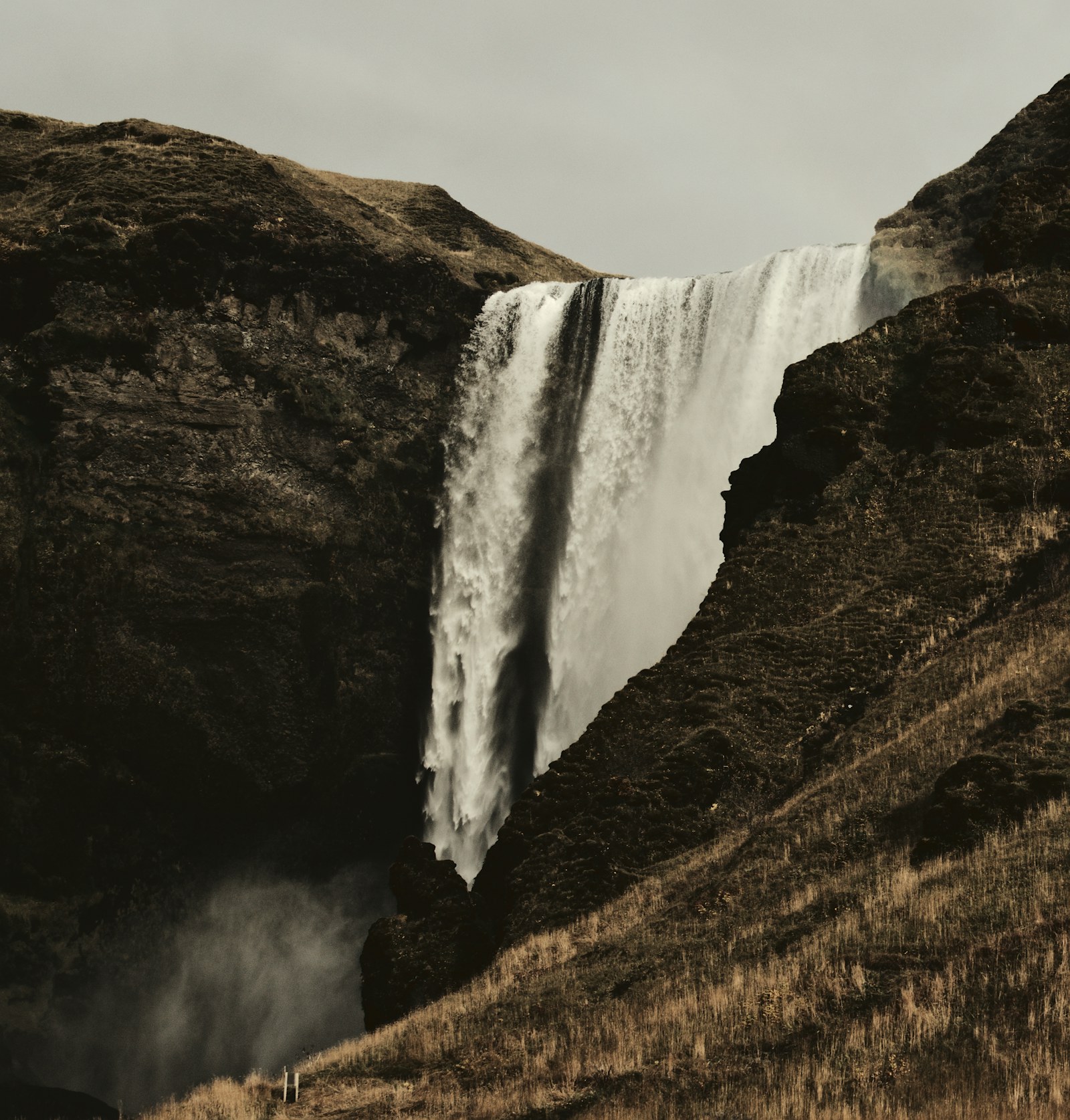
Seljalandsfoss made waterproof layers feel essential. Skógafoss was all scale and force. Then the landscape flattened into the black expanse leading to the Sólheimasandur DC-3 wreck; the walk across that terrain was part of why the stop stayed with me.
At Reynisfjara, basalt columns and dark sand made the coast look almost unreal. I kept well back from the water: the sneaker waves here are dangerous, and no photo is worth stepping into the surf.
Reynisfjara safety guidance
Falljökull on foot, Jökulsárlón from shore
The guided hike on Falljökull was the day Iceland felt most like the land of ice. Our small group put on crampons, carried ice axes and moved through a landscape of blue ice, deep crevasses and meltwater formations. Seeing a glacier from a road is one thing; walking on it with a guide is another.

We followed that with Jökulsárlón Glacier Lagoon. Icebergs drifted through the water in whites and deep blues, with the black-sand Diamond Beach nearby. I would protect time for both places even on a tighter route. I no longer have the glacier tour operator confirmed in my records, so I am leaving that name out.

Quiet roads and Stuðlagil Canyon
The farther east we drove, the more the road itself became the experience. There was less rush between stops and more time to watch the scenery change from the camper windows.
Stuðlagil was the landmark I would make room for in this stretch. The basalt columns rise beside a glacial river, and the two sides of the canyon offer different views and walking commitments. Check which access route you are taking before driving in; keep out of the river.

Hverfjall, Goðafoss and Forest Lagoon
Hverfjall looked like a dark hill until I climbed to the rim and saw the crater open below. I ran along part of the rim for a clip because the scale was so hard to show from one still frame. Goðafoss was another reminder that the waterfalls do not stop once you leave the south.
Around Akureyri, we ended a long day at Forest Lagoon near sunset. After so much wind, driving and hiking, soaking above the fjord felt completely different from our first Blue Lagoon visit: calmer, wooded and exactly what I needed.
Forest Lagoon
Fosslaug beside the river
One of my favorite low-key moments was soaking in Fosslaug, a small natural hot pool near Reykjafoss. There were no resort amenities—just warm water, a river and the cold Icelandic landscape around us.
This is a memory from my April 2026 trip, not a stop to copy now. The landowner closed public access to Fosslaug and Reykjafoss on June 29, 2026. Please respect the closure and check for an official reopening before planning a visit.
The long road west and an April aurora
The final stretch back toward Reykjavík reminded me why a Ring Road drive needs breathing room. A four-hour drive on a map can turn into most of a day when the mountains, horses, weather and unplanned pull-offs keep asking you to stop.
Near the end of the trip, we got one more surprise: Northern Lights moving across the sky. I had treated the aurora as a bonus in mid-April, and seeing it after the full loop felt like a send-off. We completed the ten-day trip on April 19.
Visit Iceland's aurora guidance
See the places that stayed with me.
I shared a short video of places from this Iceland trip. Watch the footage there, then use this guide for the route, camper van lessons and our group expense breakdown.
Watch the Iceland videoEight nights in a camper van.
The camper was both our vehicle and our accommodation. We could make breakfast, carry the layers and camera gear we needed, and sleep near the next region instead of returning to one base. For a full loop, that freedom was part of the trip itself.
Our planning corridor ran through Vogar, Vík, Höfn, Egilsstaðir, the Mývatn area, Akureyri, Blönduós and Reykjavík. I do not have every actual campsite name verified, so I would use those towns as a route outline rather than a list of booked stays.
What our Iceland trip cost.
We tracked shared expenses in Splitwise before and during the trip. Adding the 42 itemized charges visible in our ledger gives $7,154.51 in recorded group cash spending. These are the full amounts paid by different members of our four-person group, rather than my personal Splitwise balance.
| Category | Group cost |
|---|---|
| Camper van and early pickup$2,172.13 rental + $244.96 early pickup | $2,417.09 |
| Activities and admissionsGlacier hike, whale cruise, Silfra experience, Blue Lagoon, museum | $1,930.29 |
| Meals and groceriesRestaurants, supermarket and grocery runs | $859.17 |
| Campsites and reservationsFive camping charges, including advance reservations | $766.81 |
| FuelDiesel, gasoline and one gas tank entry | $552.75 |
| Travel insurance | $296.00 |
| Mixed and other itemsGas and snacks, Litlahorn, and a small supplies charge | $148.47 |
| ParkingEleven parking charges around the route | $99.17 |
| TaxisTwo rides | $84.76 |
| Recorded group cash total | $7,154.51 |
That is the group total divided by four, as a simple average. Individual Splitwise shares can differ because a few entries were allocated differently.
I used the expense amounts on the left side of the Splitwise entries and counted each charge once. Repayments between us are settlements, not additional trip costs. The Forest Lagoon entry says “paid for yourself” but shows no amount, so it is not in this total; other unrecorded expenses may also be missing.
That covered four round-trip tickets in total: mine, my brother's, my dad's and my mom's. I gave their tickets as Christmas gifts. The miles sit outside the cash total above; any award taxes or fees are not shown in these Splitwise screenshots.
The moments I would plan around again.
- Silfra. Floating through cold, clear water in a dry suit was unlike any other snorkel I have done.
- Falljökull and Jökulsárlón. Walking on a glacier and then watching icebergs drift through the lagoon made the ice feel close and alive.
- Brúarfoss and Hverfjall. One was small and electric blue; the other was a vast dark crater. Both stayed with me.
- Forest Lagoon at sunset. A quiet reset after several days of wind and driving.
- The late-trip aurora. We did not build the itinerary around it, which made seeing it in April even sweeter.
What I would change next time.
I would keep the counterclockwise route and the camper, then give it two or three more days. Ten days let us make the loop, but every quick stop could become an hour. I would rather have more room for a waterfall, a hike or an unplanned view than feel pulled toward the next campsite.
I would still choose a few anchor experiences in advance—Silfra and a guided glacier hike—then make the rest of each day flexible. The weather gets the final vote in Iceland.
What I would tell a friend going in April.
Check the road before the route.
Spring can still bring winter driving conditions. Look at SafeTravel and Road.is before setting off, and shorten the day when the conditions demand it.
Plan legal overnight stops.
Check which campsites are open on your dates. Iceland's camper rules restrict overnight camping to campsites or private land with permission.
Book the high-effort experiences with guides.
Silfra has operator requirements, and glacier terrain needs qualified guidance and equipment. Leave enough time around meeting points, gear and changing weather.
Take Reynisfjara and access changes seriously.
Stay far from the surf at the black beach. Fosslaug was part of my trip, but it closed to visitors after I went; respect the landowner's closure.
Let the aurora be a bonus.
Late April is the edge of the season. Darkness and clear skies need to line up, so enjoy the daylight itinerary even if the lights do not appear.
The drive was the destination.
I remember the dry suit at Silfra, the spray from the waterfalls, crampons on the glacier, blue ice at Jökulsárlón, the edge of Hverfjall and green light moving across the sky near the end.
But I also remember the hours between them: cooking in the camper, checking the weather and pulling over because the view ahead looked nothing like the last one. If I went back tomorrow, I would point the van toward Route 1 again—just a little slower.

.jpg)


_Photo_by_Giles_Laurent.jpg)